Security research 2023 – 2025
Smart-contract vulnerability detection.
Machine-learning models that flag four classes of Solidity vulnerability from compiled bytecode, published in two peer-reviewed papers.
What it is
Smart contracts move real money, and a single bug can lock or drain funds. This research detects four common classes of vulnerability in Solidity contracts: Ether lock, reentrancy, block-timestamp dependency, and integer overflow or underflow.
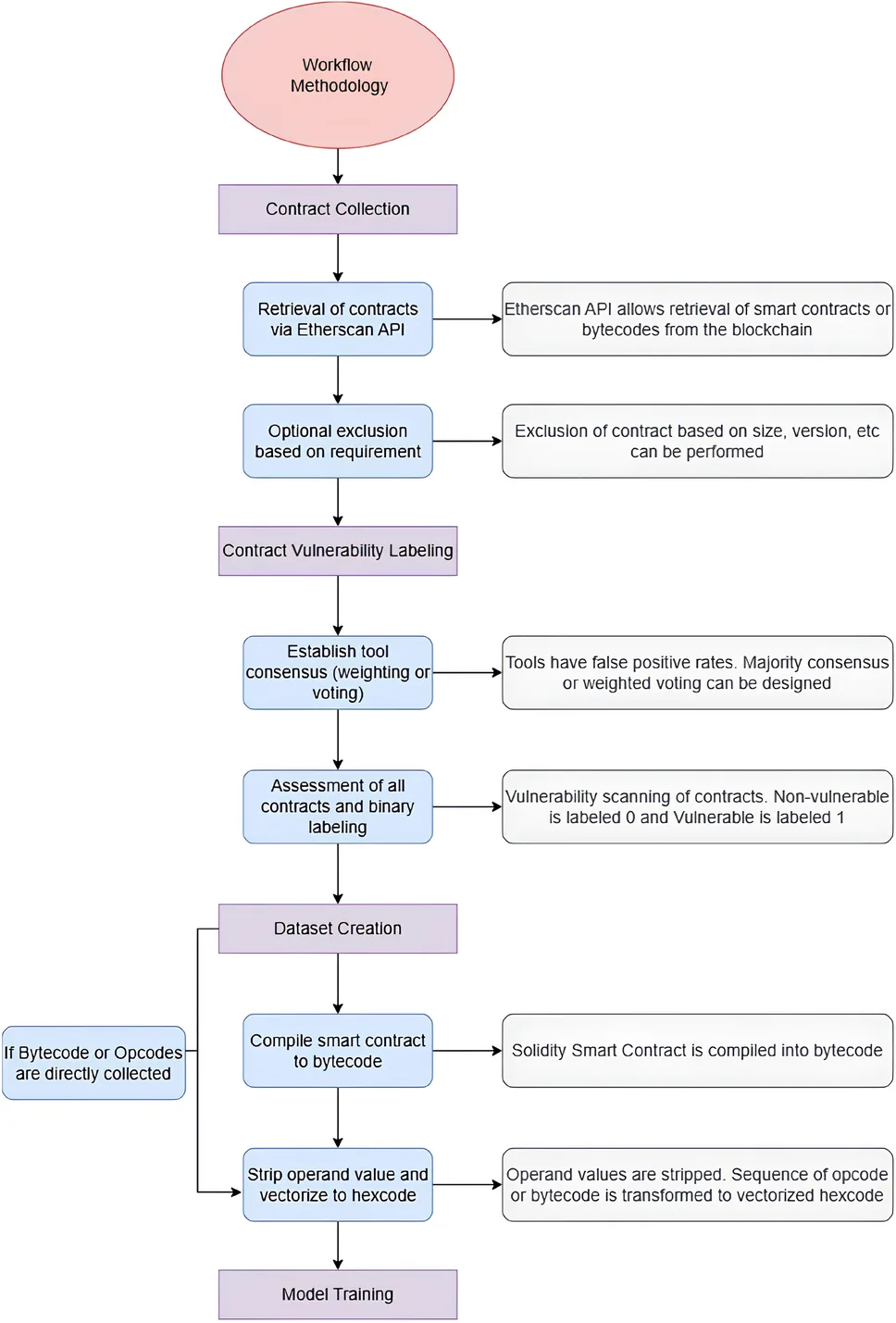
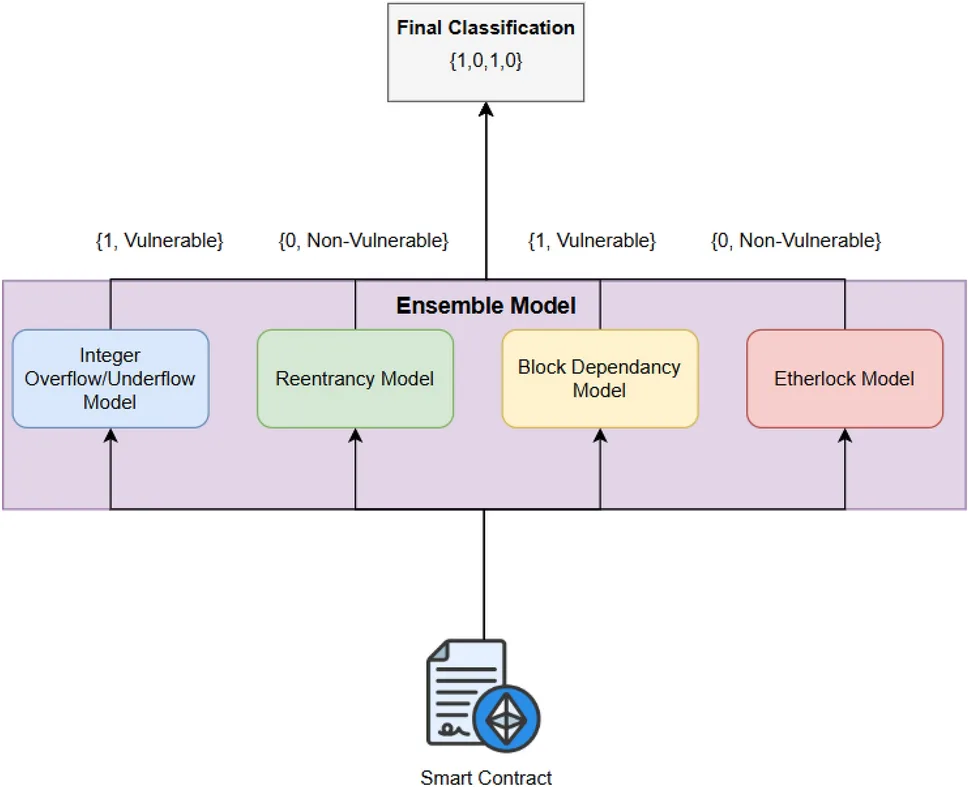
Contracts were collected from Ethereum and combined with an existing benchmark into a labelled dataset of 7,613 unique contracts. Each contract is compiled to bytecode, stripped to its opcode sequence and vectorised, and a dedicated classifier is chosen and tuned for each vulnerability. The four models are stacked into one multi-label detector and served through a web app that analyses a folder of contracts at once.
I wrote the dataset-collection code and built and tuned all of the models. The work produced a journal paper in Cluster Computing and an earlier IEEE conference paper focused on the Ether-lock vulnerability.
What was built
- Dataset collection from Ethereum through the Etherscan API, merged with SmartBugs and labelled per vulnerability.
- Bytecode compilation and opcode extraction, turned into n-gram features.
- Model selection across SVM, decision trees, random forests, k-NN, LSTM and CNN, with SMOTE to handle heavy class imbalance.
- A stacked multi-label ensemble with per-class F1 scores between 82% and 99.9% in the journal's evaluation, at around 18 ms per contract.
- An SVM for Ether-lock detection reaching 98.44% accuracy and 87% recall in the conference paper.
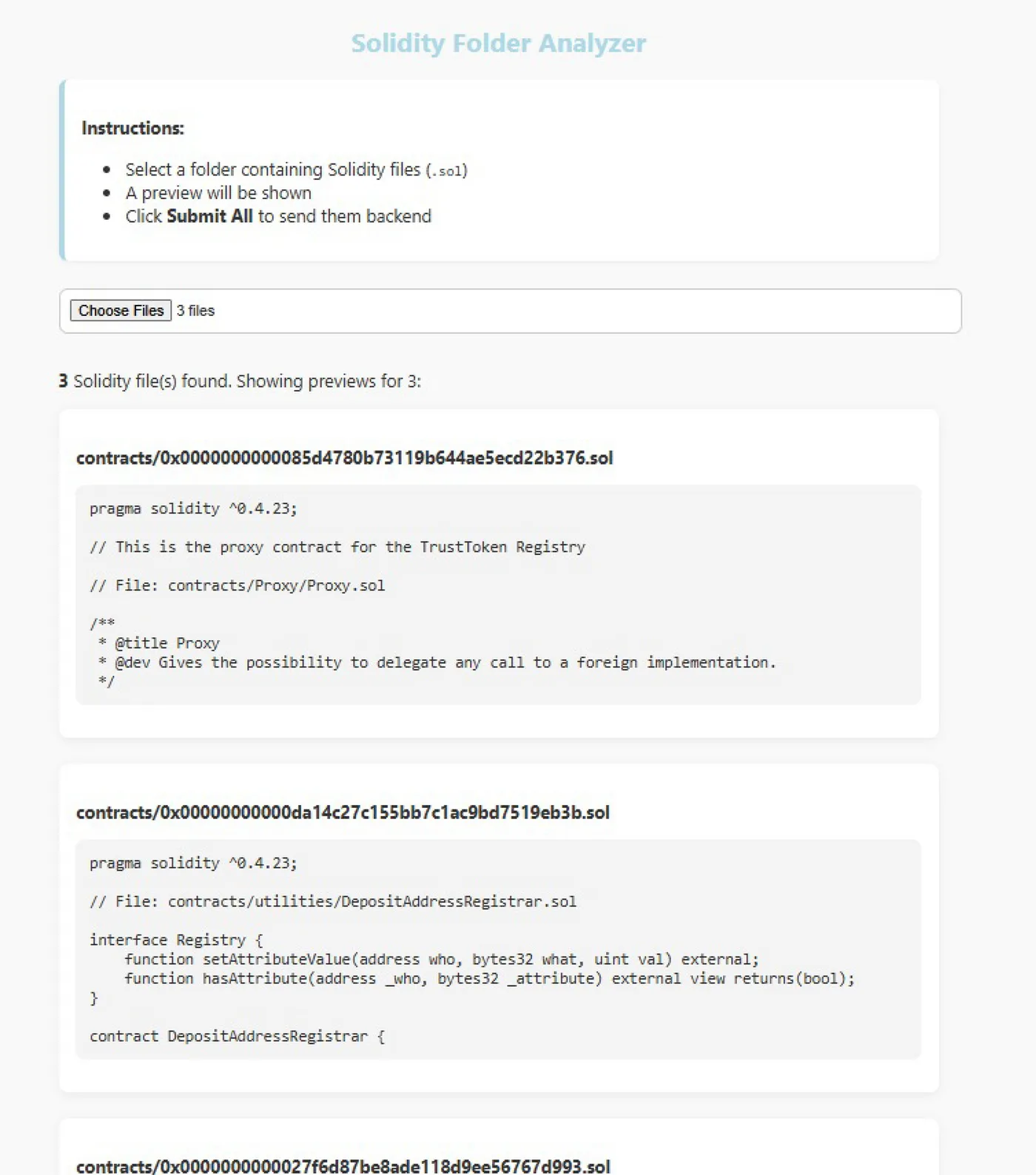
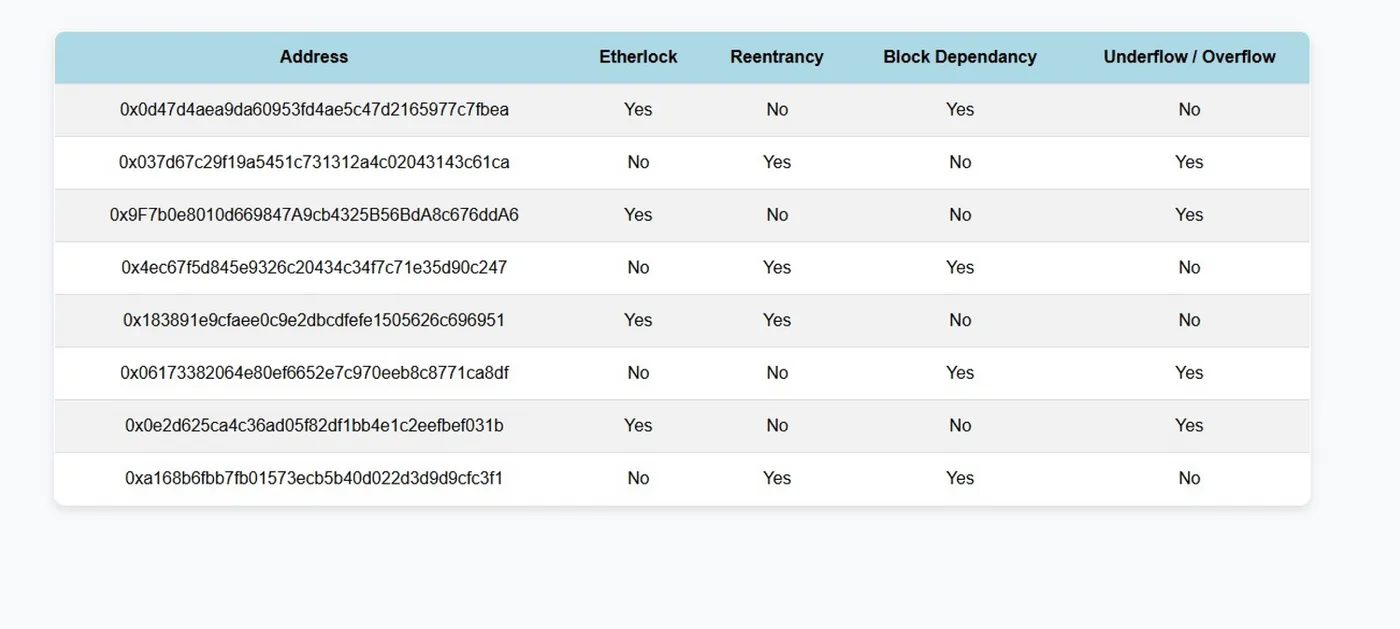
- A FastAPI service and web interface that compiles uploaded contracts and reports each vulnerability in a table.
In pictures